Skip to content

Stretching Before Golf: Protecting Your Lower Back on SWFL Courses

Golf bag standing beside a practice tee on a Southwest Florida course at sunrise
The golf swing demands more from your lower back than most players realize. Learn a practical pre-round stretching routine, smart summer habits for Southwest Florida courses, and the signs that post-round stiffness deserves an evaluation at Grace Medical.

Share This Post

Golf looks gentle from the cart path, but ask any golfer’s lower back how it feels after eighteen holes in August and you will hear a different story. The golf swing is one of the most rotationally demanding movements in recreational sport, and most players step onto the first tee with muscles that have spent the morning in a car seat. A short routine of golf lower back stretches before your round is one of the simplest, most reliable ways to protect your spine — yet it remains the part of the game most players skip.

At Grace Medical in North Fort Myers, Dr. Amy Kerr’s team sees the consequences every season: golfers from Fort Myers, Cape Coral, and Punta Gorda who felt a twinge on the back nine and hoped it would fade on its own. This guide covers why the swing loads the lower back so heavily, a practical pre-round routine, and the warning signs that stiffness has become something worth examining.

Why the Golf Swing Is Hard on the Lower Back

A full swing rotates the shoulders far beyond the hips, storing elastic energy in the trunk and releasing it through impact in a fraction of a second. That separation — the engine of clubhead speed — concentrates rotational and compressive force through the lumbar spine, which is built primarily for bending forward and back, not for high-speed twisting. The modern swing, with its stable lower body and aggressive upper-body turn, asks even more of the lumbar region than the classic swings of earlier eras.

Repetition multiplies the load. Counting practice swings and range balls, a typical round can involve well over a hundred rotations, nearly all in the same direction. The National Institute of Arthritis and Musculoskeletal and Skin Diseases notes that back pain is among the most common health problems in the United States, and repetitive asymmetric loading is a classic contributor. None of this means golf is bad for your back — it means the back needs preparation for what the swing asks of it.

Warm Muscles Before You Stretch Them

A common mistake is treating stretching as the first activity of the day. Cold muscle tolerates stretch poorly; a brief general warm-up first makes everything that follows safer and more productive. Five minutes is enough: a brisk walk from the parking lot the long way around, some easy arm circles and trunk turns, or a few half-effort practice swings with a short iron. The goal is light effort and raised body temperature, not fatigue.

Once you are warm, favor dynamic movement — controlled motion through a comfortable range — over long, held stretches before play. Research on athletic preparation consistently points toward dynamic work before activity, with longer static holds saved for after the round, when the muscles are warm and there is no performance to compromise.

Golf bag and short iron resting beside an open stretching mat near the practice tee

A Practical Pre-Round Routine

The following sequence takes six to eight minutes and targets the regions the swing depends on most. Move smoothly, stay within a comfortable range, and stop short of anything that provokes pain.

Trunk rotations with a club

Hold a club across your shoulders or chest, set your feet at address width, and rotate slowly side to side, letting your hips follow naturally. Ten controlled turns each direction wakes up the exact movement pattern the swing requires.

Standing hip circles and hinges

The hips are the lower back’s best protection: the more rotation they contribute, the less the lumbar spine must improvise. Perform eight to ten slow hip circles in each direction, then ten hip hinges — pushing the hips back as if closing a car door behind you, spine long, knees soft. The hinge pattern mirrors your address posture and primes the glutes to share the workload.

Cat-cow and open-the-gate steps

On a bench or standing with hands on a cart, alternate gently between rounding and arching the mid and lower back eight times to lubricate the spinal segments. Follow with ten knee-up, open-out steps per side to free the hip rotators. Finish with three or four smooth practice swings at half speed, building gradually to full tempo.

Swing Habits That Spare Your Spine

Preparation helps most when the swing itself is not working against you. A few habits consistently show up in golfers who stay pain-free into their later decades:

  • Let the hips turn through impact instead of keeping them locked while the shoulders fire.
  • Shorten the backswing slightly when fatigue sets in on the closing holes.
  • Squat with bent knees to read putts and retrieve balls rather than bending flat-backed from the waist.
  • Push a cart or use both straps on a carry bag to balance the load between rounds of riding.
  • Build basic trunk and glute strength in the off-hours — a resilient back is made between rounds, not during them.

Players returning from a layoff should also resist the urge to play three rounds in their first week back. Tissue tolerance builds gradually, and the same graded-return principle the clinic applies to sports injuries applies to golf: increase volume in steps, and let comfort over the following day be the judge.

Playing Through a Southwest Florida Summer

Insulated water bottle and towel in a golf cart cupholder on a humid Florida morning

August golf in Southwest Florida means heat indexes well past one hundred by mid-morning and humidity that never really leaves. Dehydrated muscle cramps more easily and recovers more slowly, which makes hydration a genuine back-protection strategy, not just a comfort issue. Book the earliest tee time you can get, drink water steadily from the first hole rather than waiting for thirst, and take advantage of shade at the turn. The afternoon storm pattern this time of year is another argument for morning golf — and a reminder to never finish a round under a darkening sky for the sake of the scorecard.

Heat also tempts players to skip the warm-up because they already feel warm. Feeling hot is not the same as having prepared the specific muscles and joints the swing uses; the routine above matters just as much in August as it would on a cool January morning.

When Stiffness Deserves an Evaluation

Ordinary post-round stiffness fades within a day or two. Patterns that deserve attention include pain that sharpens during the swing itself, an ache that lingers past forty-eight hours or shows up earlier in each successive round, pain that travels into the buttock or leg, and stiffness that starts changing your swing to avoid it. Swing compensations are a particular red flag, because they relocate stress to tissues even less suited to handle it — this season’s sore back becomes next season’s mid-back pain or hip problem.

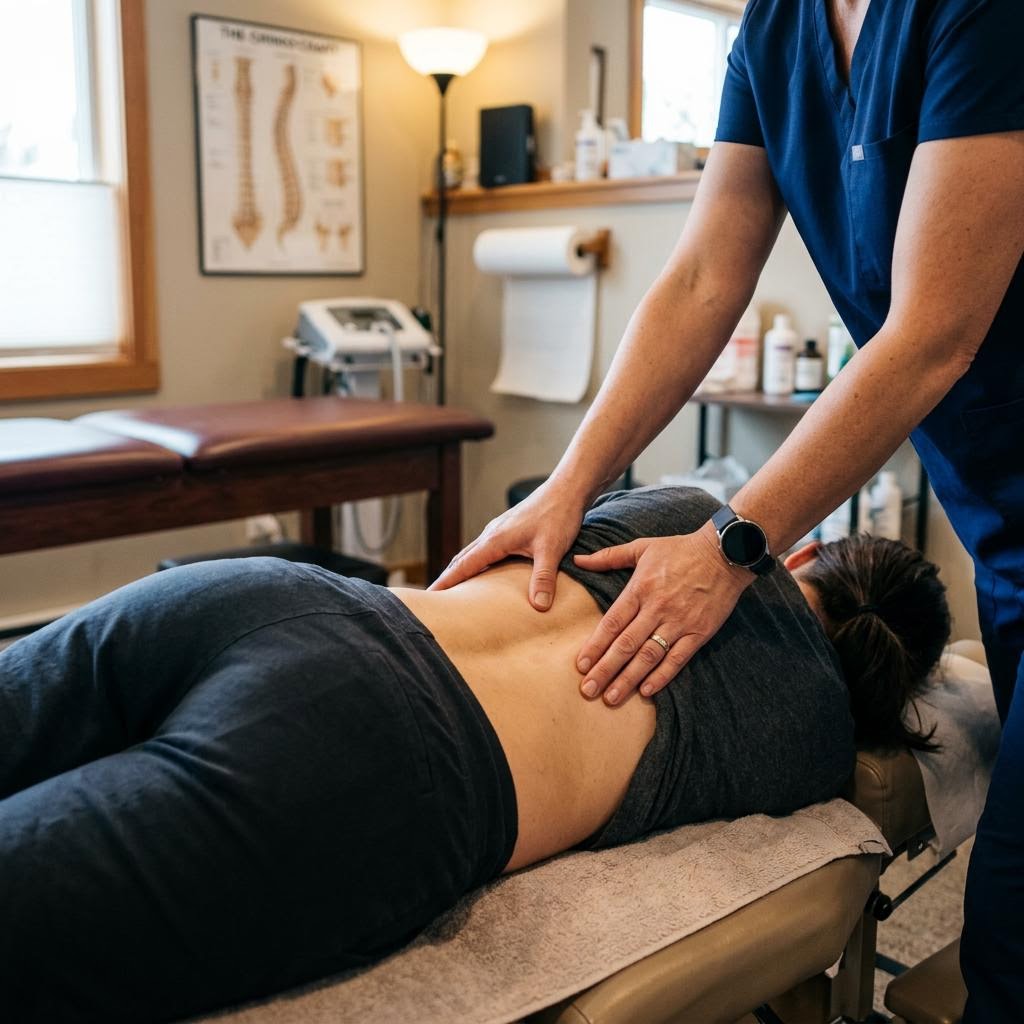
At Grace Medical, evaluation for golfers looks at the spine and also at the hips, posture, and movement patterns that feed into it. Care typically blends gentle chiropractic adjustment to restore motion in restricted segments with physical therapy to rebuild the rotation and strength the swing demands. The team is candid about expectations: care supports recovery and helps identify what to change, but it is not a substitute for sensible volume and preparation. The goal is keeping you on the course, and golfers visit from across the region, including Fort Myers and the beach communities.

Frequently Asked Questions

Should I stretch before or after a round?

Both, but differently. Before play, use a brief warm-up followed by dynamic movement — controlled rotations, hinges, and progressive practice swings. After the round, when muscles are warm, longer static holds for the hips, hamstrings, and trunk are appropriate and help maintain flexibility over time.

Is golf safe if I have had back problems before?

Many people with a history of back trouble play comfortably for decades, but the margin for skipping preparation is smaller. A graded return, consistent warm-up, and attention to hip mobility all matter more after a previous episode. An evaluation before ramping up play can identify specific restrictions or weaknesses worth addressing first — a conversation worth having in person rather than guessing.

Do back braces or support belts help on the course?

For most recreational golfers, no. A brace can feel reassuring during a flare-up, but long-term use may encourage the supporting muscles to do less, not more. Building strength and mobility provides the same support from the inside. If you feel you need a brace to finish a round, that is a sign the underlying issue deserves an examination.

Keep Your Back in the Game

A few minutes of preparation, smart pacing through the summer heat, and honest attention to early warning signs will protect far more rounds than any swing tip. If your lower back is already complaining — or you want to address a recurring issue before peak season — Grace Medical can help you understand what is driving it. Call (239) 997-8100 or book through the contact page to schedule an evaluation with Dr. Kerr’s team.

☑ Medically Reviewed by Dr. Amy Kerr, D.C. — Founder, Grace Medical & Chiropractic, North Fort Myers, FL

More To Explore

Golf bag standing beside a practice tee on a Southwest Florida course at sunrise
Pain Management

Stretching Before Golf: Protecting Your Lower Back on SWFL Courses

The golf swing demands more from your lower back than most players realize. Learn a practical pre-round stretching routine, smart summer habits for Southwest Florida courses, and the signs that post-round stiffness deserves an evaluation at Grace Medical.

Home office workstation with raised monitor, external keyboard, and adjustable chair
Pain Management

Desk Setup Tips to Prevent Neck and Shoulder Strain

Small workstation changes may help reduce desk-related neck and shoulder strain. Learn practical ergonomic adjustments, movement habits, and signs that it may be time to seek a professional evaluation.

Ready to Take the Next Step?

Contact Grace Medical & Chiropractic to schedule an appointment in North Fort Myers.

chiropractor clinic