Skip to content

Why to See a Chiropractor After a Car Accident

Calm chiropractic clinic reception and waiting area for auto accident care patients
After a car accident, stiffness or pain can appear gradually. Learn when a chiropractic evaluation may help document and guide care.

Share This Post

A car accident can shake up far more than your schedule. Even a low-speed collision transfers a surprising amount of force into the neck, mid-back, and shoulders, and the soreness that follows often shows up a day or two later rather than right away. At Grace Medical & Chiropractic in North Fort Myers, we frequently see people who felt “mostly fine” at the scene and then woke up stiff, headachy, or unable to turn their head comfortably. If you are wondering why to see a chiropractor after a car accident, this guide walks through what tends to happen to the body in a crash, what to watch for in the days afterward, and how a thorough evaluation can help you recover with fewer lingering surprises.

None of this is a substitute for a medical exam. If you have severe pain, numbness, weakness, confusion, or any red-flag symptom after a collision, please seek emergency care first. What we cover here is meant to help you make sense of the slower-developing aches that so many drivers and passengers deal with once the adrenaline wears off.

Why Crash Injuries Often Hide at First

Physical Therapy

In the moments after a collision, your body floods with adrenaline. That stress response is useful in an emergency, but it also masks pain, which is why so many people decline to mention soreness at the scene. As that chemistry settles over the next 24 to 72 hours, the strained muscles, irritated joints, and stretched soft tissues start to announce themselves. Whiplash, the rapid back-and-forth motion of the neck during a rear-end impact, is the classic example: the tissues can be overstretched in an instant, but the stiffness, headaches, and reduced range of motion build gradually.

Patients often read broad symptom summaries from sources like Mayo Clinic symptom guidance before they come in, which can be useful, but general guidance still needs to be matched to the person in front of us. The painful spot is not always the source of the problem either. A stiff neck can pull on the upper back, an irritated joint can refer pain into the shoulder blade, and protective muscle guarding can spread tension well beyond the original injury. That is why a proper assessment connects symptoms with how the body actually moves, rather than focusing only on the area that hurts.

Common Symptoms We Watch For After an Auto Accident

Everyone walks in a little differently, but certain patterns come up again and again after a crash. Recognizing them early makes it easier to choose the right plan and to know when something needs prompt medical attention rather than conservative care.

  • Neck stiffness or pain that worsens over the first few days rather than improving
  • Headaches that start at the base of the skull and wrap toward the forehead
  • Reduced range of motion when checking a blind spot or looking up
  • Mid-back and shoulder tightness, often with muscle spasm
  • Tingling, numbness, or weakness traveling into an arm or hand
  • Dizziness, trouble concentrating, or disrupted sleep in the days following the impact

Some of these warrant a faster look than others. Numbness, weakness, or symptoms that shoot down a limb deserve a careful evaluation, because they can point to nerve involvement. Rather than guessing at home for weeks, it is usually smarter to have these patterns examined so the plan can be matched to what is actually driving them.

How a Chiropractic Evaluation Approaches Whiplash and Strain

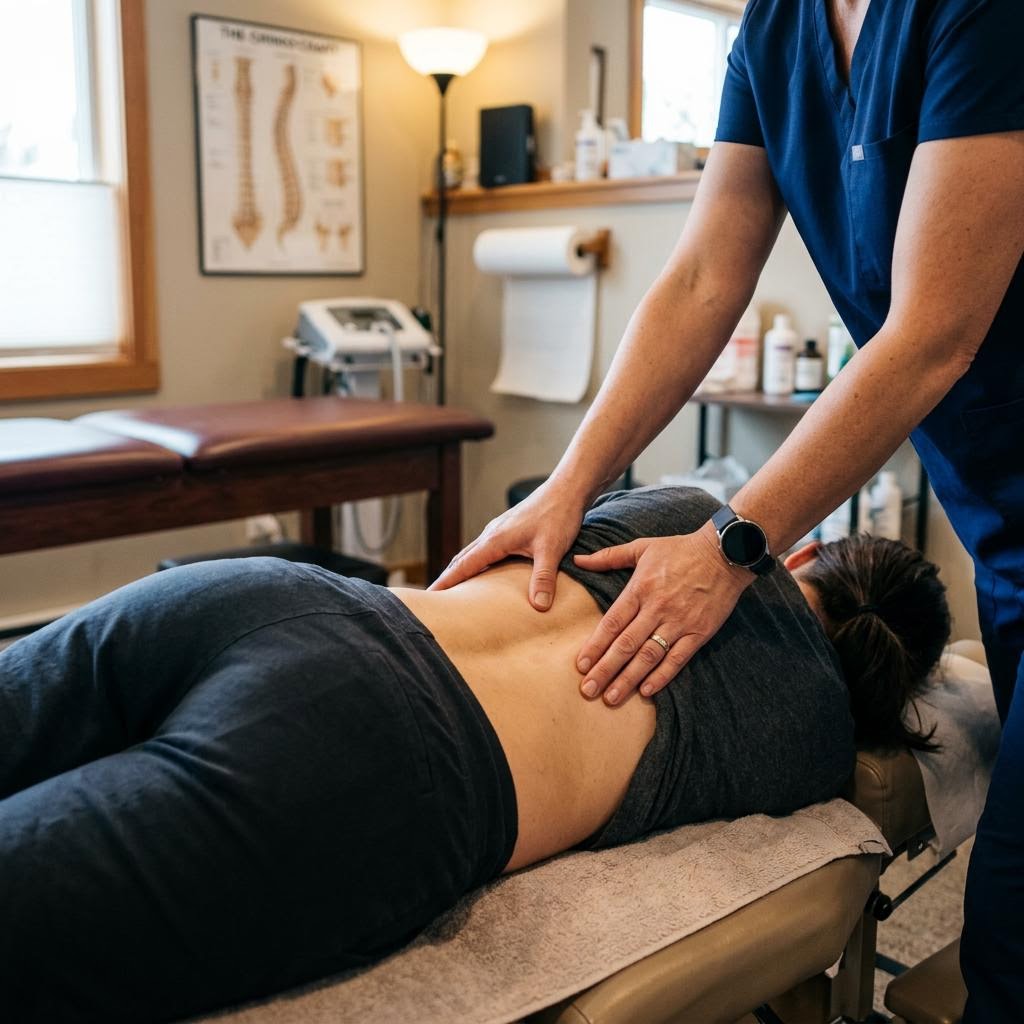
When you come in after an accident, the first priority is a history and a hands-on assessment, not an immediate adjustment. We want to understand how the crash happened, where you were sitting, how your body was positioned, and what motions reproduce or relieve the discomfort now. From there, we check spinal and joint mobility, look at how the muscles are responding, and screen for anything that suggests you need imaging or a referral before conservative care begins.

Care for accident-related strain is rarely just one thing. Many people do best with a blend of gentle joint mobilization, soft-tissue work, and a gradual, guided return to normal movement. The goal is to calm the irritated tissues, restore comfortable range of motion, and rebuild the strength and endurance that protective guarding tends to drain away. If you want to compare options on the site first, it can help to review low back pain treatment options and then look at chiropractic care to see how a hands-on plan and a rehabilitation-focused plan fit together. For background reading on musculoskeletal recovery, NIH musculoskeletal health resources are a reliable starting point.

Why Early Evaluation Tends to Pay Off

The most common mistake after a crash is waiting for the pain to disappear on its own while continuing the exact activities that keep the tissues irritated. Another frequent error is chasing temporary relief, a heating pad here, a random stretch there, without addressing the movement restriction or strength gap that keeps the problem cycling back.

When people weigh why to see a chiropractor after a car accident, they tend to underestimate how much smoother progress feels when the plan is specific. Soft-tissue injuries can settle into stubborn patterns of stiffness and compensation if they are left to “work themselves out.” A focused evaluation, a realistic home routine, and an appropriate treatment frequency usually produce steadier results than bouncing between rest, guesswork, and short-term pain management. Documenting symptoms early also creates a clear record of how the injury behaved, which can matter if an insurance claim is involved.

Planning the Right Next Step in North Fort Myers

Prepared chiropractic adjustment table with clean towels in a wellness clinic room

If a recent accident is affecting your sleep, your driving, your work, or your time with family, the most useful step is to have it examined before the pattern becomes more stubborn. In North Fort Myers, that usually means identifying which movements are limited, which tissues are overloaded, and whether the goal should be pain reduction, restored function, or both. We will also be honest about what conservative care can and cannot do for your situation, and we will refer out promptly if your exam suggests you need a different level of care.

If you want more context on the rehabilitation side of recovery, start with physical therapy services, then reach out to Grace Medical & Chiropractic for an evaluation. When a plan is built around how your body is actually moving after the crash, recovery becomes far easier to navigate than it does when treatment stays generic. Small differences in how an injury is assessed and managed early on tend to compound over the weeks that follow, which is exactly why a closer look usually saves frustration later.

Frequently Asked Questions

When should someone schedule an evaluation instead of waiting it out?

Pain that keeps returning, travels into an arm or leg, interferes with sleep, or limits daily movement is worth evaluating instead of guessing at home for weeks. After a car accident specifically, it is reasonable to get checked even if the soreness feels mild, since whiplash-type symptoms often build over the first few days.

Can chiropractic care and physical therapy work together?

Yes. Many patients do best when spinal and joint mechanics are addressed alongside guided exercise, mobility work, and strength progressions, especially after a collision when both stiffness and deconditioning are in play.

Are home exercises still important if someone is getting treatment?

Usually yes. The right home routine helps maintain progress between visits and gives you a practical way to manage flare-ups outside the clinic while the injured tissues heal.

Take The Next Step

If you have questions about chiropractic care after an auto accident, call (239) 997-8100 or use our contact page to reach Grace Medical & Chiropractic. A direct conversation can help you compare care options around your symptoms, mobility, and recovery goals in North Fort Myers.

☑ Medically Reviewed by Dr. Amy Kerr, D.C. — Founder, Grace Medical & Chiropractic, North Fort Myers, FL

More To Explore

Sciatica Treatment
Pain Management

When a Child May Need a Chiropractor

Children may need chiropractic evaluation for selected musculoskeletal concerns. Learn signs to discuss with a qualified provider.

Do You Want To Boost Your Business?

drop us a line and keep in touch

Chiropractic treatment slider image at Grace Medical clinic