Skip to content

How Spinal Alignment Affects Pelvic Floor Health

Spinal Adjustments
Spinal alignment and pelvic floor symptoms can overlap. Learn when back, hip, or core mechanics may warrant a musculoskeletal evaluation.

Share This Post

Back pain, hip mobility, posture, and pelvic floor symptoms can overlap because the spine and pelvis work together during movement. In some patients, lumbar or sacroiliac mechanics may influence pelvic floor tension, core control, or comfort. That does not mean every pelvic floor concern is caused by the spine, but it does mean a careful musculoskeletal evaluation can be useful when symptoms persist.

The Spine-Pelvis Connection: Anatomy Explained

Chiropractic Care

The relationship between spinal alignment and pelvic floor health starts with basic anatomy. The sacrum — the triangular bone at the base of your spine — serves as the foundation of the pelvic floor. The pelvic floor muscles attach directly to the sacrum and coccyx, so changes in pelvic position can influence how these muscles load and relax.

The lumbar spine (L1-L5) controls nerve signals to the pelvic floor through the sacral plexus. Irritation or altered mechanics around these levels may affect the coordinated muscle contractions involved in pelvic floor function. The sacroiliac (SI) joints connect the spine to the pelvis and transfer load between your upper body and legs. When SI joint dysfunction occurs, it changes the tension balance across the entire pelvic floor.

Think of the pelvic floor as a hammock suspended between the pubic bone and the tailbone, supporting the bladder, uterus, and rectum. Its ability to function — contracting and relaxing on demand — depends on balanced tension throughout the system. That balance starts with proper spinal alignment from the lumbar vertebrae through the sacrum.

How Misalignment Contributes to Pelvic Floor Issues

Different movement or alignment patterns may contribute to different pelvic floor complaints. Lumbar hyperlordosis — an excessive lower back curve — tilts the pelvis forward, shortening and tightening the pelvic floor muscles. This creates what clinicians call a hypertonic pelvic floor: muscles that are chronically contracted, leading to pelvic pain, urinary urgency, and discomfort during activity.

The opposite pattern is equally problematic. Flat-back posture, where the natural lumbar curve is lost, tilts the pelvis backward. This lengthens and weakens the pelvic floor muscles over time, contributing to stress incontinence and increasing the risk of pelvic organ prolapse. Many women experience this postural shift after pregnancy without realizing it’s affecting their pelvic floor.

SI joint dysfunction on one side creates asymmetric pelvic floor tension. This often presents as one-sided pelvic pain or hip pain that doesn’t respond to stretching alone. The asymmetry means one side of the pelvic floor is working harder than the other, which leads to fatigue and dysfunction over time. Nerve irritation around the L4-S3 levels may also affect muscle control, which is one reason persistent weakness should be evaluated rather than treated with generic exercises alone.

Chiropractic Approaches to Pelvic Support

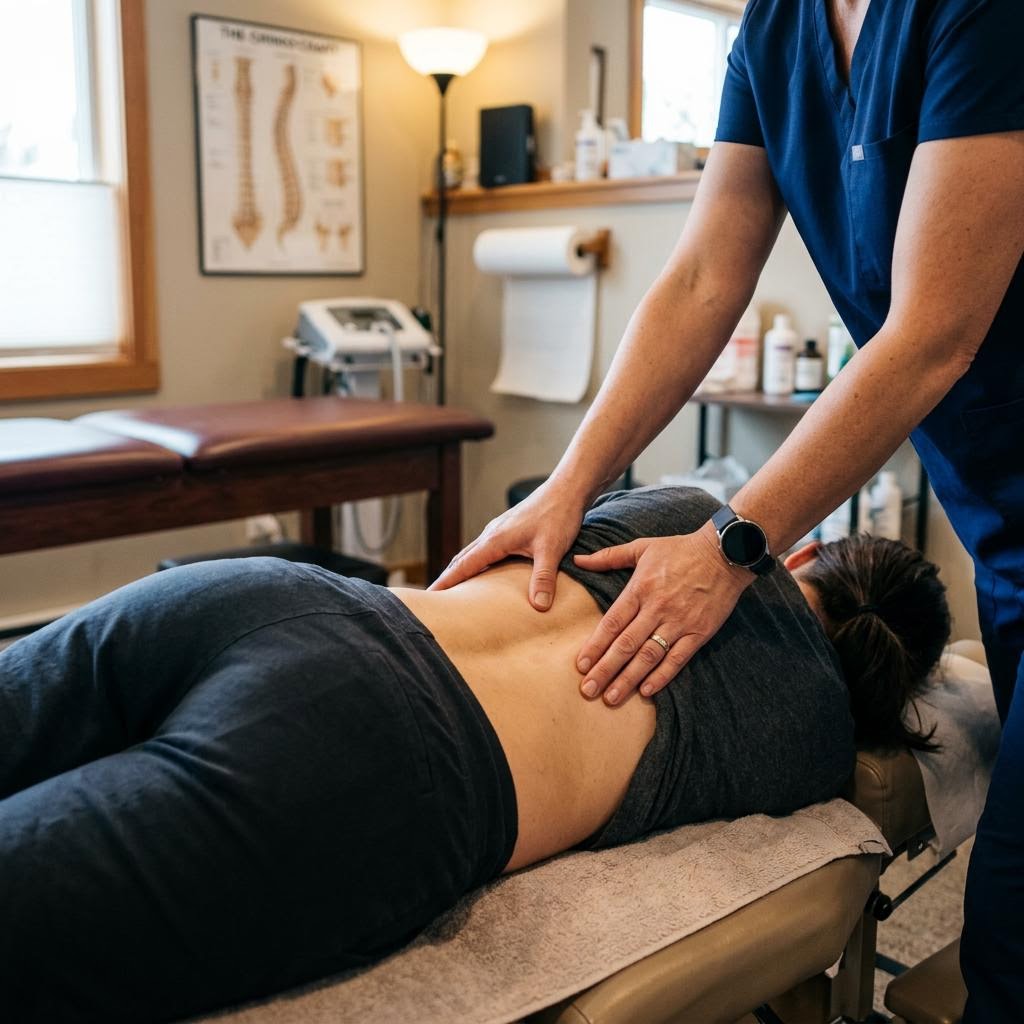
Chiropractic treatment for pelvic floor-related issues focuses on restoring proper structural alignment so the muscles can function at their optimal length and tension. Spinal adjustments targeting the lumbar spine and SI joints may be used to address mobility and alignment factors that contribute to symptoms. Improving lumbar and pelvic mechanics may help the pelvic floor work with less strain as part of a broader care plan.

Spinal decompression therapy offers another pathway, particularly for patients with disc-related nerve compression at L4-S3. By gently reducing mechanical pressure around irritated spinal structures, decompression therapy may support comfort and function without surgery for appropriate candidates. This is especially relevant for patients whose pelvic floor weakness hasn’t responded to exercises alone.

Soft tissue work on the psoas, piriformis, and hip rotators addresses the muscular component. These muscles share attachment points with the pelvic floor, and tightness or dysfunction in any of them influences pelvic floor tension. Postural correction and core stabilization exercises prescribed alongside chiropractic adjustments help maintain alignment between visits and build the lasting core support that keeps the pelvic floor functioning properly.

Complementary Treatments Including Pelvic Floor Therapy

athlete chiropractic care

Pelvic floor physical therapy works directly on the pelvic floor muscles through internal and external manual techniques, strengthening exercises, and relaxation training. Combining pelvic floor therapy with chiropractic care addresses both the structural cause (spinal misalignment) and the muscular effect (pelvic floor dysfunction), producing better outcomes than either treatment alone.

For symptoms such as incontinence, pelvic pain, or a feeling of heaviness, patients may also need evaluation by a qualified pelvic floor physical therapist, gynecologist, or other appropriate provider. Grace Medical & Chiropractic can coordinate care when chiropractic care or physical therapy is only one part of the picture.

Yoga and Pilates-based programs that emphasize pelvic-neutral positioning complement chiropractic alignment work by training the body to maintain proper posture during movement. These movement practices can reinforce mobility, posture, and core control work between visits. Biofeedback and neuromuscular re-education help patients learn to engage and relax pelvic floor muscles correctly — an especially valuable skill after chiropractic care has restored proper nerve function to the area.

When to Seek Specialist Care

If pelvic floor symptoms such as incontinence, pain, or a feeling of heaviness persist despite core strengthening and stretching, a spinal evaluation should be part of the diagnostic workup. Many patients cycle through pelvic floor exercises and lifestyle modifications without improvement because the underlying spinal contribution hasn’t been identified.

Patients experiencing both lower back pain and pelvic floor dysfunction should strongly consider coordinated care. Treating one without addressing the other frequently leads to incomplete results and recurring symptoms. The spine and pelvic floor are part of the same system — a treatment plan that acknowledges this connection is more likely to produce lasting relief.

Post-surgical patients — including those who’ve had spinal fusion, C-section, or hysterectomy — often develop compensatory movement patterns that affect both the spine and pelvic floor. Early chiropractic intervention can identify and correct these patterns before they become chronic. Grace Medical & Chiropractic in North Fort Myers evaluates the full spine-to-pelvis chain to determine whether spinal misalignment is contributing to pelvic floor symptoms.

Frequently Asked Questions

Can a chiropractor help with pelvic floor dysfunction?

Sometimes. Chiropractors evaluate lumbar and sacroiliac mechanics that may influence pelvic floor tension, posture, and nerve-related symptoms. If pelvic floor concerns are present, care may need to be coordinated with a qualified pelvic floor physical therapist, gynecologist, or other appropriate provider.

How long does it take to see improvement in pelvic floor symptoms with chiropractic care?

Response varies. Some patients notice changes after the early phase of care, while others need a longer plan with home exercises, physical therapy, or referral care. Grace Medical & Chiropractic sets expectations after an exam and adjusts the plan based on symptoms, function, and safety.

Should I do Kegels if I have lower back pain and pelvic floor issues?

Not necessarily. If your pelvic floor is hypertonic (tight and overactive) due to spinal misalignment, Kegels can actually make symptoms worse by further tightening already-contracted muscles. A proper evaluation that includes spinal assessment will determine whether your pelvic floor needs strengthening, relaxation, or a combination of both.

If you’re experiencing pelvic floor symptoms alongside back pain, schedule an evaluation with Grace Medical & Chiropractic to assess the full spine-pelvis connection. Call (239) 997-8100 to book your appointment.

☑ Medically Reviewed by Dr. Amy Kerr, D.C. — Founder, Grace Medical & Chiropractic, North Fort Myers, FL

More To Explore

Do You Want To Boost Your Business?

drop us a line and keep in touch

Chiropractic treatment slider image at Grace Medical clinic